

Perceive
Read every signal the business produces — traffic, leads, spend, rankings, inbox, calendar.
The operating system
Omni OS connects observation, priority, action, proof, and memory. The point is not more automation. The point is an operating loop that knows what happened and uses that evidence the next time it moves.
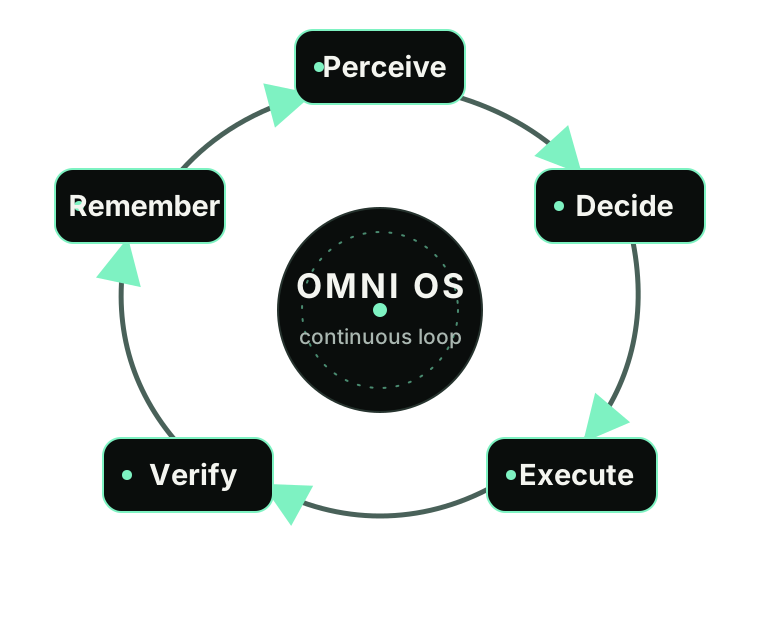
The five operations
A pipeline ends when the task ships. An operating loop continues until the outcome is checked and the lesson is retained.
Read every signal the business produces — traffic, leads, spend, rankings, inbox, calendar.
Rank what actually matters this week against what can be acted on now.
Do the work. Publish, respond, adjust, ship.
Check the result against live data, not against the plan.
Keep what worked so the next cycle compounds instead of repeating.
Operating boundaries
Decisions start with the signals the business is producing now, not a stale planning document.
When authority, missing context, or risk crosses the defined edge, the system escalates instead of guessing.
The operator can see what changed, why it changed, and what evidence came back afterward.
Useful outcomes become operating context so the system does not relearn the same lesson from zero.
Start with the bottleneck
Describe the recurring work, the systems it touches, and the point where it currently stalls.